Here are 10 common signs of clutter in your home that feng shui principles can help you address.
If you’re looking at clutter through a feng shui lens, each type of clutter can be viewed symbolically as an area where life feels “stuck.” This is a traditional/spiritual interpretation rather than a scientifically established effect.
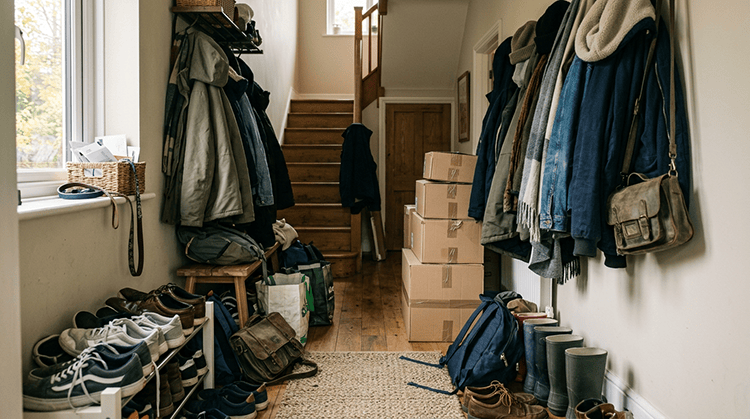
- Blocked entryway — Shoes, bags, or boxes crowding the entrance can make the space feel unwelcoming.
New opportunities
The entrance represents how energy, opportunities, and experiences enter your life. Clutter here can symbolize difficulty welcoming something new. - Cluttered countertops — Too many items on kitchen or bathroom surfaces can create visual chaos.
Mental overload
Crowded surfaces may reflect too many competing priorities, unfinished tasks, or difficulty creating mental space. - Stuff under the bed — Items stored beneath the bed can make the bedroom feel less restful.
Rest and relationships
In feng shui, the bed is associated with rest and intimate relationships. Storage underneath can symbolically represent holding onto old issues instead of allowing yourself to fully rest or move forward. - Overloaded closets — Clothes you never wear can make it difficult to create a sense of order.
Identity and the past
Clothes are connected symbolically with how you present yourself and who you are becoming. Keeping everything can represent attachment to former versions of yourself. - Broken or unused items — Things waiting to be repaired may keep your home feeling unfinished.
Unfinished business
Objects waiting to be fixed can serve as visual reminders of things you’ve postponed—repairs, decisions, conversations, or personal goals. - Paper piles everywhere — Bills, mail, and paperwork can quickly create stagnant-looking spaces.
Decisions and responsibility
Mail, bills, documents, and paperwork can symbolize obligations and decisions waiting for your attention. Clearing them can create a feeling of completion. - Cluttered nightstands — A crowded bedside table can make your bedroom feel mentally busy.
Difficulty switching off
Because the bedroom is associated with restoration, a crowded bedside area can symbolize carrying the day’s worries into your personal downtime. - Blocked windows — Excess furniture or belongings around windows can reduce the feeling of openness and light.
Perspective and possibility
Windows are traditionally associated with vision and how we perceive the outside world. Blocking them can symbolically represent feeling closed off, limited, or unable to see what’s ahead. - Unused rooms becoming storage areas — A room filled with miscellaneous belongings can feel neglected rather than purposeful.
Neglected potential
When an entire room becomes a dumping ground, feng shui symbolism might interpret it as an area of life that isn’t being actively lived—such as creativity, social connection, or personal growth. - Clutter that triggers negative emotions — If certain objects remind you of stress, regret, or unfinished business, they may deserve reconsideration.
Emotional attachment
Sometimes the physical object isn’t the problem; it’s the emotional story attached to it. Keeping something because of guilt, obligation, grief, or regret can make the space feel psychologically heavy.
The bigger idea
Feng shui can be especially useful as a reflection tool: rather than asking “What bad energy is this clutter causing?”, ask “What does this clutter remind me that I’m postponing, holding onto, or making room for?”
That turns decluttering into something more meaningful than simply making the house look tidy.
Feng shui isn’t a scientifically established method for changing energy, but its decluttering practices can be useful for creating a calmer, more functional home.
Till next time . . .

For all my lists, subscribe to 10 With Tom. Sign up here.