
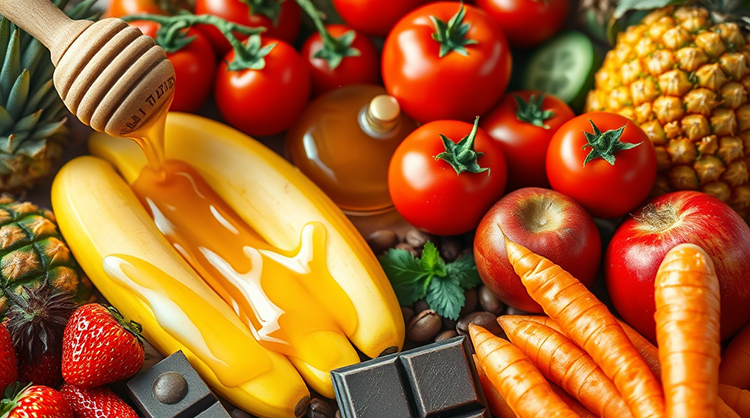
Here are 10 interesting food facts that might surprise you:
- Honey Never Spoils: Archaeologists have found pots of honey in ancient Egyptian tombs that are over 3,000 years old and still perfectly edible! Honey’s low moisture content and natural acidity prevent bacteria from growing.
- Bananas Are Berries, But Strawberries Aren’t: Botanically speaking, bananas qualify as berries, but strawberries do not! A “true” berry has seeds inside the fruit, while strawberries have their seeds on the outside.
- Tomatoes Were Once Considered Poisonous: In 18th-century Europe, tomatoes were thought to be poisonous because of their acidic nature and the fact they belong to the nightshade family (which includes some toxic plants).
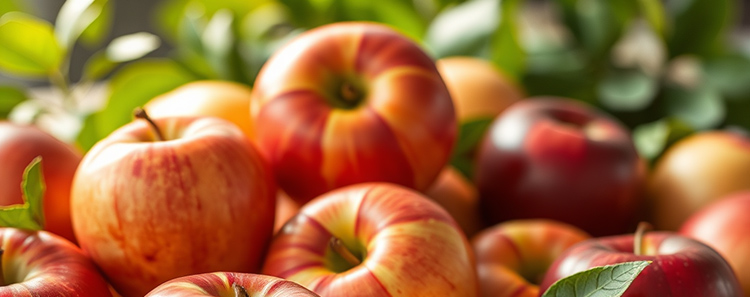
- Apples Float: Apples are made up of about 25% air, which is why they float on water. They’re also one of the few fruits that ripen off the tree. I’m sure you knew this if you ever played bobbing for apples!
- Cucumbers Are 95% Water: Cucumbers are basically water-filled snack vessels! This high water content makes them super hydrating and refreshing.
- Chocolate Was Once Used as Currency: The ancient Mayans and Aztecs valued cocoa beans so highly that they used them as currency. They also made a spicy, bitter drink with them, not the sweet chocolate we know today.
- The World’s Most Expensive Coffee Is Made From Poop: Kopi Luwak, a coffee made from beans that have been eaten and excreted by civet cats, can cost upwards of $500 per pound. The process is believed to make the coffee smoother and less acidic.
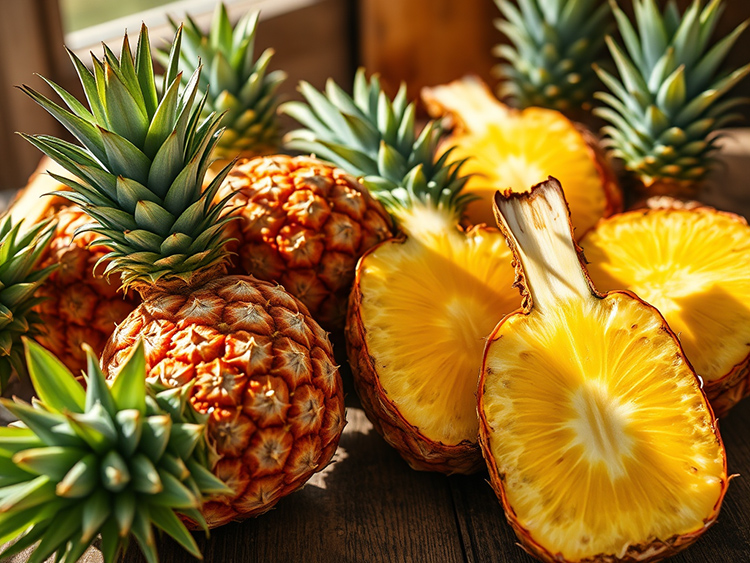
- Pineapple Can “Eat You Back”: Pineapple contains an enzyme called bromelain, which breaks down protein. If you eat too much raw pineapple, it can actually irritate the inside of your mouth.
- Wasabi is Mostly Horseradish: Real wasabi is difficult to grow and is expensive, so many restaurants serve a fake version made from horseradish, mustard, and green dye.
- Carrots Were Originally Purple: The orange carrot we know today wasn’t cultivated until the 17th century. Originally, they were purple or white, and the Dutch are credited with developing the orange variety as a tribute to the royal House of Oranges.
RECEIVE 10 WITH TOM in your email each time I publish. Sign up here.

 10withtom.com