
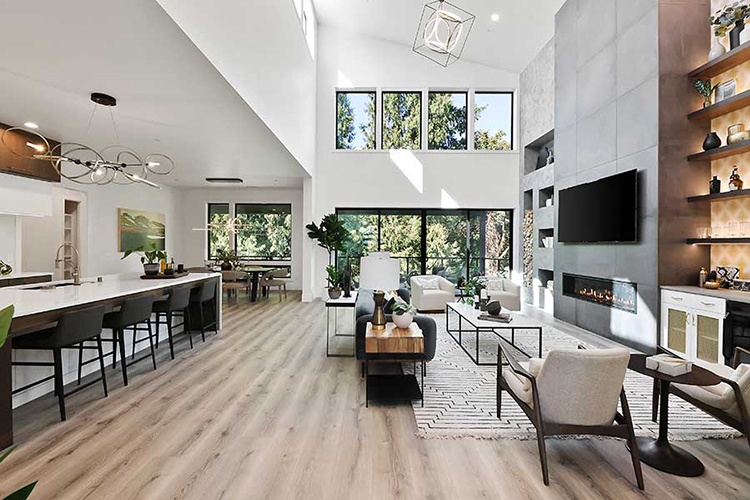
Open concept houses (with open floor plans) have become popular for their spaciousness and the way they encourage social interaction, but they also come with several downsides.
Here are ten common complaints about open concept homes:
- Lack of Privacy
Open layouts remove walls that would normally create separate rooms, making it hard to have any personal space. Noise and activity from one area easily bleed into another, which can be overwhelming for people who value solitude. - Noise Levels
With fewer walls, sound travels easily. Cooking noises from the kitchen, conversations in the living room, and TV sounds all blend together, creating a noisy environment that can make it hard to focus or relax. - Difficult to Heat or Cool
Open spaces can be inefficient in terms of energy use. Without walls to contain heat or air conditioning, maintaining a consistent temperature can be challenging, which can result in higher utility bills. - Cooking Smells
The lack of barriers means that cooking smells from the kitchen spread throughout the entire living space. While some scents may be pleasant, they can linger for long periods and be unwelcome in other areas of the house. - Limited Wall Space for Art or Shelves
Open concept layouts often mean fewer walls, which limits the amount of space available for hanging artwork, placing bookshelves, or other types of wall storage. - Harder to Hide Messes
In a traditional home, you can close the door to hide clutter in certain rooms, but in an open concept home, any mess in one area is visible from multiple rooms, requiring constant tidying up to maintain a clean look. - Reduced Soundproofing
Without walls to buffer sound, there’s less soundproofing between different areas of the house. This can make it difficult to have conversations or enjoy entertainment without disturbing other people in the home. - Decorating Challenges
Decorating an open concept space can be tricky. Without clear boundaries between rooms, it can be hard to define spaces and create cohesive themes. Furniture placement is often more complicated because there’s no clear demarcation for different “zones.” - Overexposure
In an open layout, everyone is constantly exposed to what others are doing, which can create a sense of being “on display.” This overexposure can feel exhausting for those who prefer to retreat to private spaces from time to time. - Too Trend-Driven
Open concept homes are often tied to a design trend that may not hold its appeal over time. As preferences shift toward more defined spaces again, the resale value of a fully open concept home could potentially decrease, making it a less timeless choice for homeowners.
Though open concept houses have their benefits, these downsides highlight why they might not be for everyone.
RECEIVE 10 WITH TOM in your email each time I publish. Sign up here.

 10withtom.com