

New York City has an extensive subway system, and different stops are iconic for various reasons—whether due to architectural design, proximity to landmarks, or overall importance in the daily life of commuters.
I have favorites just because I like the station or it’s convenient to where I need to be or it’s just part of my daily life. It’s comfortable, if that makes sense.
The subway operates 24 hours a day, 7 days a week, 365 days a year. Riding the subway is one of the easiest and most convenient ways to get around the city. For most riders, the subway fare is $2.90. Reduced fares are available for people 65 and older, people with disabilities, and low-income New Yorkers.
A great way to pay is with Apple Pay. The system is called OMNY – after 12 paid rides in a 7 day period, the rest are free. It’s unlimited. Info on OMNY is here.
Here’s a list of 10 notable subway stops in NYC, considering factors like popularity, design, and connection to key destinations:
Times Square – 42nd Street (1, 2, 3, N, Q, R, W, 7, S)
One of the busiest and most important stations in NYC, located at the heart of Manhattan. It connects to major lines and is a hub for tourists due to its proximity to Times Square, Broadway theaters, and nearby attractions.
Grand Central – 42nd Street (4, 5, 6, 7, S)
This iconic station is connected to Grand Central Terminal, a historic landmark. It’s also a major transportation hub for both local and commuter trains, offering easy access to Midtown Manhattan.
Fulton Street (A, C, 2, 3, 4, 5, J, Z)
A key transit point in Lower Manhattan, near the Financial District and the World Trade Center. The station’s recent renovations and its role as a gateway to the One World Observatory make it a standout.
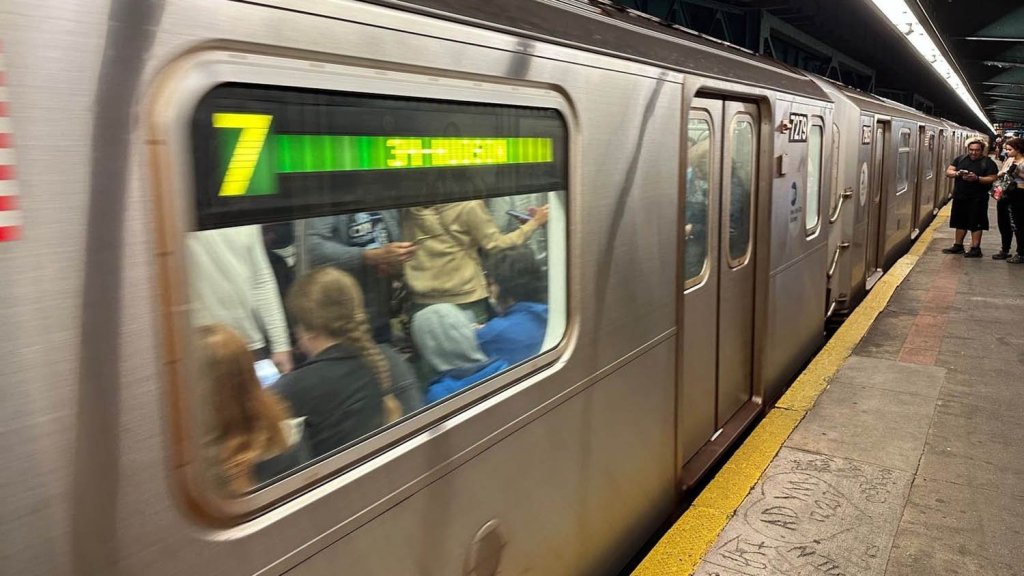
34th Street – Herald Square (B, D, F, M, N, Q, R, W)
This is a major station near Macy’s flagship store and Madison Square Garden. It’s a shopping destination and critical transit point in Midtown Manhattan.
Union Square – 14th Street (4, 5, 6, L, N, Q, R, W)
A bustling station known for its proximity to the Union Square Greenmarket, and it serves as an essential connection between different subway lines, with easy access to Downtown, Midtown, and Brooklyn.
Brooklyn Bridge – City Hall (4, 5, 6, J, Z)
Near City Hall and the Brooklyn Bridge, this historic station offers easy access to some of New York’s most famous landmarks and is crucial for commuters traveling between Manhattan and Brooklyn.
World Trade Center – Cortlandt Street (1, A, C, E, N, R, W)
The rebuilt Cortlandt Street Station is part of the World Trade Center complex. It’s a meaningful station for its history and its proximity to the 9/11 Memorial and Museum.
59th Street – Columbus Circle (1, A, B, C, D)
A major station near Central Park, the Museum of Arts and Design, and Lincoln Center. It’s a busy transit hub for locals and tourists alike.
72nd Street (1, 2, 3)
Known for its striking design and proximity to the Upper West Side, this station is a gateway to some of the city’s most famous cultural institutions, including the American Museum of Natural History.
Court Street – Borough Hall (2, 3, 4, 5, R)
A key station in Brooklyn, connecting Downtown Brooklyn to Manhattan. It’s near the Brooklyn Heights Promenade and provides access to many historic neighborhoods.
These stops represent a mix of transit importance, tourist appeal, and architectural significance within New York City’s subway system.
Here is a good map at the MTA website.
RECEIVE 10 WITH TOM in your email each time I publish. Sign up here.
 10withtom.com